
Non-Degree / Dates: 13 – 18 July 2026
The Architecture of Surprise: Writing Poems, Prose Poems and (Lyric) Essays
To ‘essay’ means to try, and a good essay is a mode of exploration: essayists put pen to paper not simply to communicate what they already know, but to pursue hunches and uncover connections. Similarly, a good poem of any kind ‘must ride on its own melting’, as Robert Frost put it, ‘like a piece of ice on a hot stove’: ‘no surprise for the writer, no surprise for the reader’. Like its prose cousin the essay, then, the poem should carry not only its reader but also its author to forms of words, and to imaginative spaces, they could never have anticipated arriving at. Glyn Maxwell argues that poetry has more in common with screenplay than with any kind of imaginative prose. But then, he also dismisses the prose poem – literature’s most mulish hybrid, and entirely its own creature – as ‘prose written by a poet’.
Are you attracted to genre-bending work? Keen to give your writing a vitamin boost by trying something new? Then this is the course for you! Over six days, we’ll delve into key techniques for evolving a range of pieces of lyric writing. From steering free verse into organic form to manipulating the elastic band of the sentence in prose poems, and from point of view in the poem (why does no-one speak of point of view in poetry?) to finding the right voice, style and shape for an essay, you’ll absorb important principles for how best to realise your preoccupations in words. Seminar-style discussions centred on sample poems, prose poems and essays, and on a small amount of related discursive material, will be complemented by practice periods, in which you’ll work with exercises designed to hone your craft and spark your imagination, and workshop-style peer and tutor feedback sessions. We’ll begin with the free verse poem (days one and two), then move to the essay (days four and five) via a pitstop with the prose poem (day three). At the end of the week, the course will culminate in presentations of work written in the preceding days.
Like ‘creative non-fiction’, prose poems and lyric essays may seem like contradictions in terms. On this course – which will suit students interested in writing across forms and into the spaces between them – you’ll experience them (and, indeed, what Sylvia Plath called the ‘smallish, unofficial, garden-variety’ lyric poem) as sites of positive perplexity and fruitful abundance, and as sources of startling illumination.
Why this course?
Programme
The course is 6 days long. The sessions will run from 9 am to 1.45 pm, with breaks for coffee and lunch. Sessions comprise seminars and workshops; reading and textual analysis, giving and receiving feedback. The texts provided by the teacher will focus on different elements that participants will practice in their own writing. Independent work includes daily preparatory reading and responsive writing.
The detailed day-by-day programme will be available in March/April 2026.
Teacher(s)
Miriam Gamble is a poet and essayist from Belfast, Northern Ireland. She has published three books of poems with Bloodaxe Books: The Squirrels Are Dead (2010), Pirate Music (2014) and What Planet (2019); her first book of essays, Little Acts of Vigilance, came out with The Lifeboat in 2024. A Senior Lecturer in Creative Writing at the University of Edinburgh, Miriam has received numerous awards for her writing, including, most recently, the 2020 Piggott Poetry Prize.
Miriam McIlfatrick-Ksenofontov (course coordinator) is a lecturer of Anglophone literature and literary analysis at Tallinn University, where she defended her PhD thesis on the poetics of translation and creative process in translation. She is a translator of Estonian poetry for oral performance and print publication. She received an Estonian Cultural Endowment award for her translation of Doris Kareva’s poetry in 2018 and the Looming (Creation) journal prize for her own poetry in Estonian translation in 2019.
Participants
This summer course is suitable for people interested in writing poetry and short-form creative non-fiction, from relative beginners to more experienced writers.
During the course you will be expected to attend all the seminars and workshops, submit your work for peer review and create a portfolio of your own writing.
The course is limited to 15 participants. Age: 18 years+
Credit points
Upon full participation and the completion of the course, the students will be awarded 2 ECTS points and a certificate of completion.
Course fee
NB! Accommodation, cultural programme and meals are not included in the price.
| Early-Bird Course Fee (until 31 March) | 470€ |
| Regular Course Fee (after 31 March) | 530€ |
Contact
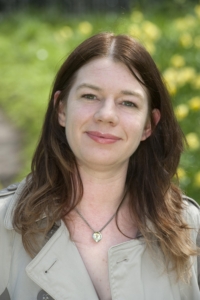
Miriam Gamble
course tutor
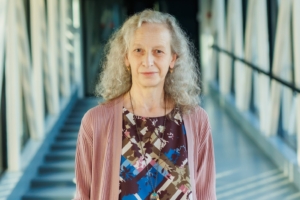
Miriam McIlfatrick-Ksenofontov
course coordinator
Tatiana Ivanova, Estonia
Creative Writing in English #tss2019